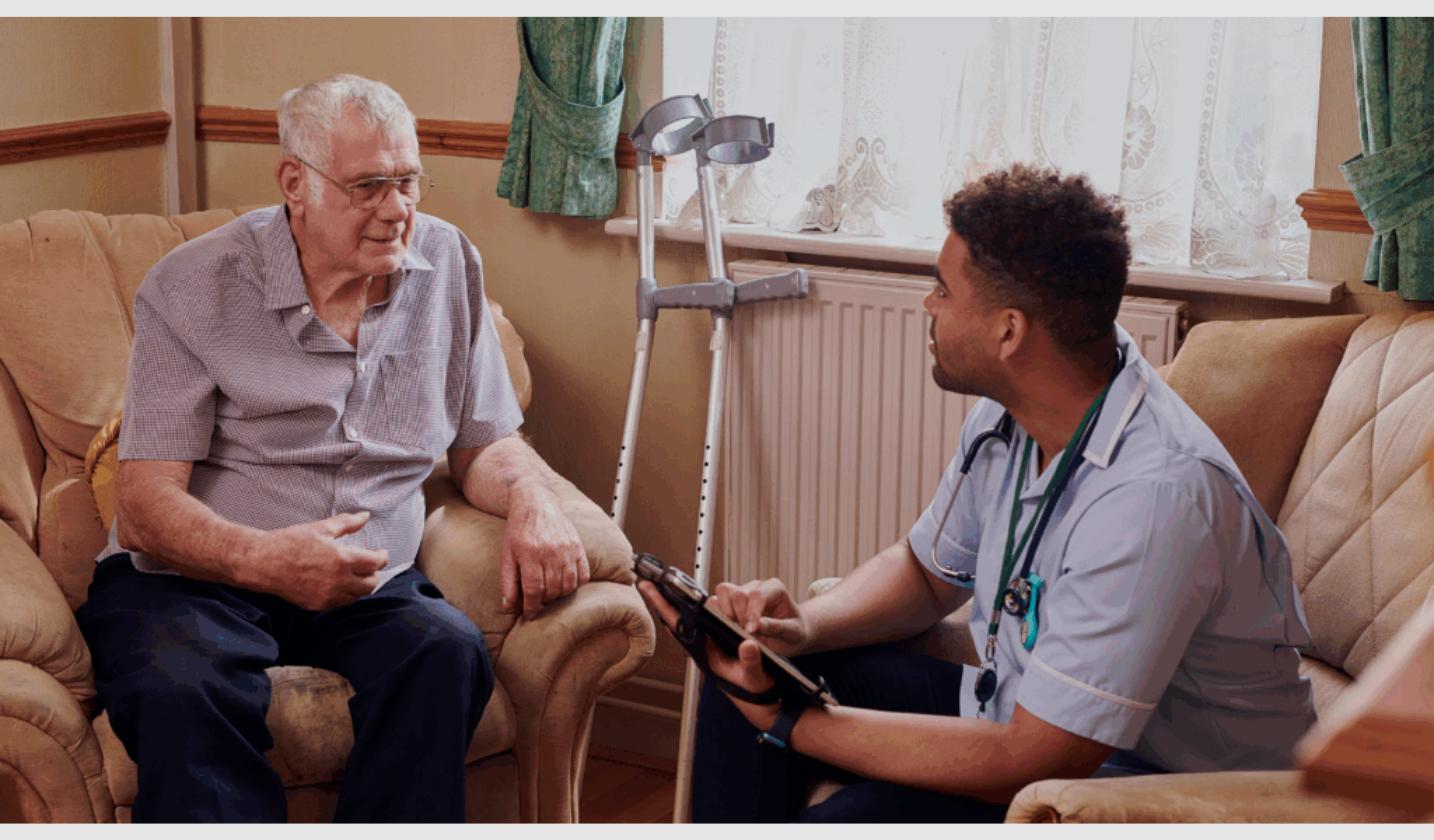
Home care in New York looks different from one neighborhood to the next. Some caregivers navigate subway lines and high-rises. Others drive hours between rural homes on back roads with no signal. The settings may vary, but the goal is the same: deliver reliable care and document every visit accurately.
Electronic Visit Verification was designed with those realities in mind. It helps agencies meet state and federal requirements and keeps day-to-day operations running smoothly for clients and caregivers alike.
This guide covers what New York’s EVV rules require of your agency and how the right software makes compliance easier without slowing down care.
What is Electronic Visit Verification (EVV) in New York?
Electronic Visit Verification (EVV) confirms that home health and personal care visits happen as scheduled. In New York, caregivers can record visits with a mobile app, a landline phone, or a fixed device (FOB) in the home. GPS is optional, according to the New York State Department of Health (NYSDOH) EVV FAQ.
Before EVV, agencies tracked visits on paper timesheets, and the NYSDOH EVV FAQ lists cutting that paperwork burden as one of the program’s goals. But paper records couldn’t reliably verify that care was delivered as reported. New York’s State Comptroller says the state built EVV to validate service delivery and reduce improper charges.
The Comptroller’s November 2024 audit reviewed Medicaid personal care claims dated January 2021 through March 2023. It found $14.5 billion paid for 82 million services (44%) with no matching EVV record. For home health care claims dated January through March 2023, $97.6 million (89%) had no match.
Understanding New York EVV requirements and compliance
In New York, Electronic Visit Verification (EVV) is mandatory for all Medicaid-funded Personal Care Services (PCS) and Home Health Care Services (HHCS) that involve home visits. This requirement is part of the 21st Century Cures Act.
According to the Centers for Medicare & Medicaid Services (CMS), the law requires every state to use EVV for these services. The NYSDOH EVV FAQ lists preventing fraud, waste, and abuse among the program’s goals.
According to the NYSDOH EVV Program Guidelines, New York required EVV for personal care services starting January 1, 2021, after a one-year good-faith extension from the federal deadline. Home health care services followed with a January 1, 2023 requirement date. CMS lists New York as fully compliant for home health as of January 1, 2024, in its EVV compliance-status table.
The state follows a provider choice model. Your agency picks its own EVV system, and New York EVV compliance depends on that system meeting both federal and state requirements. Per the NYSDOH EVV FAQ, NYSDOH doesn’t endorse or certify any EVV vendor, so your agency must confirm a system can send compliant data to eMedNY.
Meeting those requirements starts with the six data points NYSDOH’s EVV FAQ lists for every visit:
- Type of service performed
- Client receiving the service
- Caregiver providing the service
- Date of service
- Start and end times
- Location of service delivery
That might sound simple, but compliance doesn’t stop at data collection. Per the NYSDOH EVV Program Guidelines, ongoing compliance also requires your agency to:
- File an annual EVV attestation through the eMedNY portal for each MMIS ID or NPI you bill under.
- Keep that attestation current, because a missed one is referred to the Office of the Medicaid Inspector General (OMIG) for review.
- Submit EVV data to New York’s EVV Data Aggregator, which lives in the Medicaid Management Information System (MMIS) through eMedNY.
- Decide who submits the data, whether that’s your agency, your EVV vendor, a managed care plan, or a third-party aggregator. Claims are still billed separately.
- Train every employee who touches EVV, including field caregivers and office staff, to log visits correctly and handle low signal or missed check-ins.
Want to see more? Book a demo and speak to an expert
Common EVV compliance risks and how to avoid them
In home care, plans change fast. A caregiver runs late. A client cancels. Someone forgets to clock out. It might not seem like a big deal in the moment, but those little slip-ups can lead to bigger problems.
In home care, plans change fast. A caregiver runs late. Someone forgets to clock out. It might not seem like a big deal in the moment, but those little slip-ups can lead to bigger problems.
According to the NYSDOH EVV FAQ, missed or inaccurate records can surface as overpayment findings in a compliance review. Those findings can lead to recoupments and closer scrutiny from OMIG and NYSDOH.
To avoid these issues, make sure you:
- Know where EVV applies. The NYSDOH Guidelines exempt live-in caregivers only if they share the client’s permanent residence, with proof on file.
- Check 24-hour shifts carefully. The Guidelines still require EVV for caregivers who work them but live elsewhere.
- Monitor visit data for unusual time patterns and location mismatches. One uncaught clock-out from the wrong location can turn into an overpayment finding or audit questions.
- Review every manual edit. The State Comptroller’s 2024 audit flagged manual adjustments made without a recorded reason as a risk to EVV record integrity.
- Stay audit-ready. Organized, reliable EVV data helps your agency respond quickly and accurately if you’re subject to a compliance review.
Prioritizing these practices keeps Medicaid billing moving and makes audits far less stressful.
How EVV supports New York agencies and caregivers
Running a home care agency isn’t easy. Between shifting schedules, mobile teams, and strict Medicaid rules, there’s a lot to manage — and a lot that can fall through the cracks. EVV helps agencies stay organized and connected, so care gets delivered the way it should.
Here’s how it supports your team every day:
- Increased accountability: GPS-enabled tracking confirms caregivers are where they need to be, creating accurate, verifiable records for every in-home visit.
- Fewer billing delays: Capturing visit data at the point of care (not hours later) reduces errors and helps billing teams submit clean claims faster.
- Clearer, faster documentation: Digital records replace manual logs with timestamped, compliant data that’s ready for audits, reviews, or internal reporting.
- Stronger operational oversight: Supervisors gain real-time visibility into care delivery across locations and shifts, making it easier to spot issues early and stay compliant.
What to look for in New York EVV software
Meeting EVV requirements is crucial, but the right platform should do more than check a compliance box. When you compare EVV software for New York Medicaid, look for a system that supports how your agency delivers care and handles Medicaid billing day to day.
Here are a few key features to consider:
- Mobile EVV access enables live visit tracking and real-time documentation.
- Integrated workflows connect scheduling, billing, payroll, and EVV tracking in a unified system.
- Real-time oversight gives supervisors live visibility into visits and caregiver activity.
- A user-friendly design makes it easy for both caregivers and admin teams to stay consistent.
- Compliance-ready tools provide secure recordkeeping that simplifies audits.
Why agencies choose AlayaCare for EVV compliance
AlayaCare was built to support the full scope of home care operations. If you’re evaluating New York home care software with EVV built in, AlayaCare combines mobile EVV and billing in one connected platform. Your team doesn’t have to stitch data together across systems.
Here’s what sets AlayaCare apart:
- The mobile caregiver app lets caregivers record visits in real time from the field, keeping records accurate without added paperwork.
- Built-in offline mode keeps caregivers on track in rural or low-signal areas where connectivity isn’t always reliable.
- Caregivers without a smartphone can use the IVR option, available in multiple languages and dialects. The app supports more than 10 languages, including Spanish.
- A fully integrated platform connects EVV, scheduling, billing, and payroll in one system to eliminate duplicate data entry and reduce manual work.
- Live visibility shows supervisors who is delivering care and when, so they can make faster decisions and keep compliance oversight tight.
- Detailed audit trails and automated recordkeeping keep visit logs organized, so your team can prepare for audits without digging through files.
- Missing-visit alerts and EVV vs. claims reconciliation reports help your team close gaps before billing.
- Exception handling is built in, and visit data goes straight to eMedNY.
With AlayaCare, compliance is built into your workflows, so every visit is tracked and every record is ready the moment you need it.
Frequently asked questions
New York follows a provider choice model, meaning agencies can select the EVV system that best fits their operations, as long as it meets requirements set by the New York State Department of Health and federal guidelines.
Failure to comply can result in denied claims, delayed payments, or penalties. Accurate EVV data is particularly important for timely Medicaid reimbursement and continued participation in Medicaid services.
Yes. When you’re implementing EVV, having it integrated with billing makes a big difference. It helps your agency streamline claims, reduce errors, and stay compliant with both state and federal requirements.
For official guidance, compliance updates, and technical help, visit the New York State Department of Health website.
For New York Medicaid, an EVV-compliant visit is one where your system captures all six required data elements. Those elements go to the state’s EVV Data Aggregator in eMedNY, and the claim you bill needs a matching EVV transaction. Your agency also needs a current annual EVV attestation on file.
Under the NYSDOH EVV Program Guidelines, only caregivers who share a permanent residence with the member are exempt. Your agency must keep proof of that shared address, such as a NYS ID, utility bill, tax return, or bank statement. Caregivers who work 24-hour shifts but live elsewhere still need EVV.
New York follows a provider choice model, meaning agencies can select the EVV system that best fits their operations, as long as it meets requirements set by the New York State Department of Health and federal guidelines.
As of October 2026, New York doesn’t deny or pend claims automatically when they lack a matching EVV record, according to the NYSDOH EVV FAQ. NYSDOH can run compliance reviews, though, and those can uncover overpayments and lead to referrals to the Office of the Medicaid Inspector General (OMIG).
Missing a required attestation is also referred to OMIG. Clean EVV data is your best protection for Medicaid reimbursement.
Yes, when you’re implementing EVV, having it integrated with billing makes a big difference. It helps your agency submit cleaner claims and stay compliant with both state and federal requirements.
For official guidance and technical help, visit the New York State Department of Health EVV program website.
Updated , originally published