Support at Home is live. The pressure is showing up in margins, and small planning gaps can now carry a real cost.
Stewart Brown’s March 2026 benchmark found that operating returns fell from $3.77 to $0.58 per client day, despite higher service prices. In the March quarter, the result turned negative, reaching a loss of $0.46 per client day.
That leaves providers with a different challenge: understanding the reform is only the starting point. Providers also need to recognise early when the care being delivered is no longer aligned with a participant’s plan or available funding and have time to adjust before the gap becomes costly.
Margin starts in the plan
A Support at Home plan is more than an administrative requirement. It sets the financial and operational conditions for the care that follows. Therefore, the plan needs to be financially viable before a provider commits to delivering it.
Deferring mandatory price caps did not remove the pressure. Prices remain under scrutiny, while administration and package fees sit within service prices, leaving less room to absorb planning errors. Commit too much care against a fixed quarterly budget and providers risk unfunded work; plan too cautiously and funds may go unspent while participants receive less support than expected.
A stronger starting point is a plan that brings together:
- the participant’s needs
- available funding
- expected services
- the cost of delivery
- the points at which the plan may need to change
That gives teams a clearer basis for participant conversations and makes it easier to recognise when delivery is moving away from the original plan.
Visibility turns reporting into action
The pressure providers are feeling came through in our recent Support at Home webinar: protecting margins was the top concern for 41% of attendees, followed by budget visibility at 30%. Managing participant and family expectations, and keeping claiming, statements and service delivery aligned, each accounted for 15%.
These are connected problems. They all depend on teams being able to see what has been planned, what has been used and what needs attention while there is still time to respond.
That means keeping four things aligned: budgets, participant statements, service delivery and the conversation with participants and families. When one falls out of step, both the provider’s margin and the participant relationship can suffer.
Yet visibility is not consistent. Half of attendees said they use a real-time dashboard or system view to track the pooled 10% budget. A quarter rely on periodically updated spreadsheets, 21% do not yet have a clear way to see it, and 4% mostly track it at quarter-end or in arrears.
A retrospective report can explain what happened. A current view gives finance, operations and care management time to do something about it. It also creates a clearer record of how funds were planned, used and adjusted, supporting more confident compliance and audit conversations.
Want to see more? Book a demo and speak to an expert
Planning and visibility work together
Planning and visibility work together. In the webinar poll, 57% of attendees said clearer planning and real-time budget visibility would make an equal difference. A further 33% prioritised clearer plans and cost breakdowns up front, while 5% prioritised real-time pooled budget visibility.
A realistic plan gives teams a clear starting point. Ongoing visibility shows whether delivery is staying on track. Used together, they help teams spot when delivery or spending starts to move off plan, make better decisions during the quarter and give participants clearer answers about what their funding can support.
That connected approach is reflected in two AlayaCare capabilities: the Support at Home Service Planner, which helps teams build a clear plan and cost breakdown before services begin, and the Care Management Dashboard, which gives teams a current view of pooled care management spending. Together, they support the shift from setting a plan once to monitoring delivery and acting earlier when spending starts to move off track.
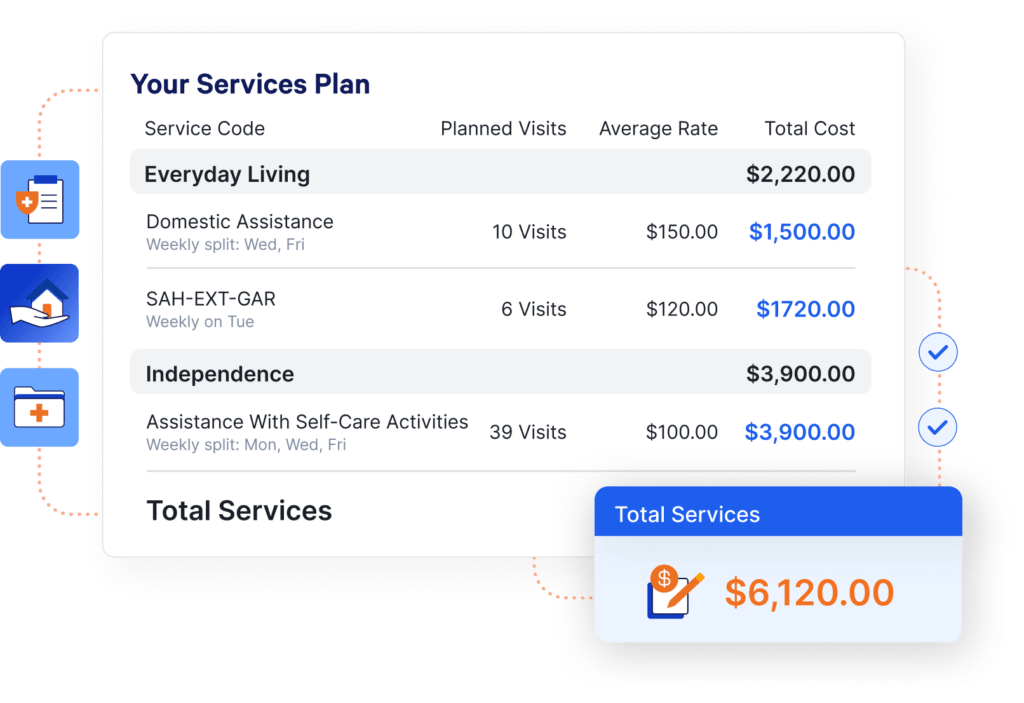
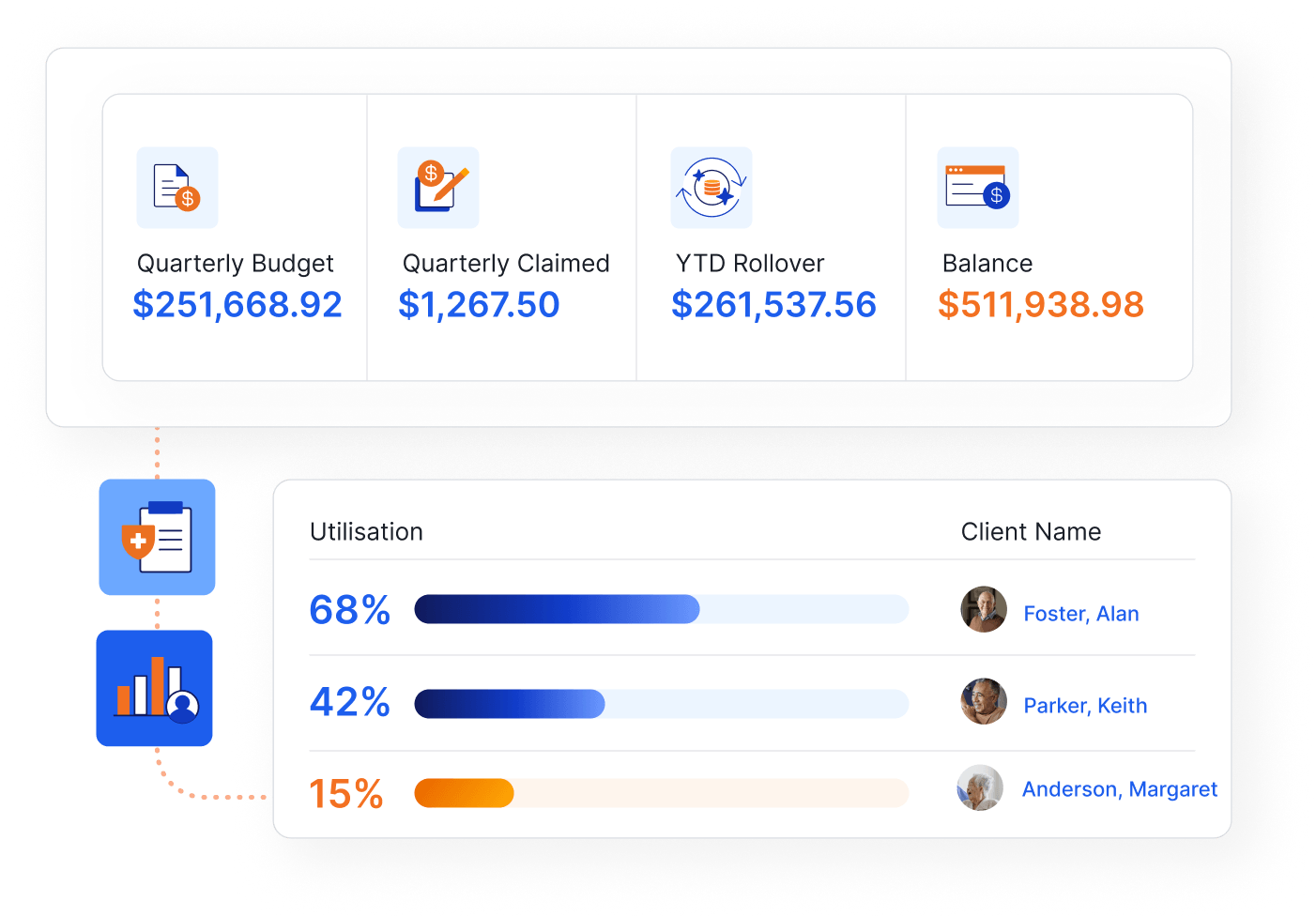
“The two capabilities work together: the Service Planner sets a clear plan at the start, while the dashboard keeps the plan visible over time. This gives teams a clearer, shared view so they can apply professional judgement earlier and make better-informed decisions.”
Jon Middleton, VP, Product Management & Technical Services, AlayaCare.
Three habits that support better decisions
Plan before delivery
Use onboarding to establish a realistic view of needs, funding, expected services and delivery costs.
This is not about predicting every change. It is about creating a clear starting point, making assumptions visible and giving teams something meaningful to review when circumstances change.
Track as care happens
Monitor client budgets, service delivery and the pooled care management budget as part of the normal flow of work.
Spreadsheets and retrospective reports may still have a role. They should not be the first place a team discovers that spending has drifted or that planned services are no longer aligned with available funding.
Act on the signal
Agree in advance what should happen when utilisation, delivery or pooled budget use moves away from plan.
The response may be a revised service plan, a clearer conversation with the participant, additional support for the team or a closer look at the underlying data.
Three questions to ask now
- Can finance, operations and care management see the same current information?
- Do teams know early when utilisation or pooled budget use is drifting from plan?
- Can participants and families receive clear answers based on what is funded and being delivered?
If the answer is no, the first step may not be another tool. It may be agreeing on the process, ownership, training and information teams need to work from. The right technology can then make that approach easier to maintain.
Visibility creates time to make a better decision
Connecting planning, visibility and communication helps providers protect margin, give participants clearer answers and respond before small variances become larger problems. It is the difference between reporting what happened and having time to decide what happens next.
See how AlayaCare’s Support at Home Service Planner and Care Management Dashboard can help your team build clearer plans, track pooled care management spend and act earlier when budgets start to drift.
Frequently asked questions
Providers have less room to absorb operating costs as prices remain under scrutiny, costs rise and administration and package fees sit within service prices. Accurate planning, efficient delivery and close monitoring of utilisation are increasingly important.
Start with a realistic plan that connects the participant’s needs, available funding, expected services and cost of delivery. Then track delivery and spending as care happens so teams can act before small variances become larger problems.
A retrospective report shows what happened. A current view gives teams time to investigate budget drift, respond to under- or overspend and make better-informed decisions during the quarter.
Monitor it continuously alongside client budgets and service delivery. Identifying overspend early can help reduce unfunded work, while recognising underspend can highlight unused service capacity.
They need both. Planning sets a realistic starting point, while ongoing visibility shows whether delivery is staying on track.
Updated , originally published