Category: Clinical Documentation

The next frontier: Agentic AI takes home-based care from insight to action

Resource Hub
Blog

The next frontier: Agentic AI takes home-based care from insight to action

AI has already proven it can help teams make sense of complex clinical and operational data. But in an industry where staffing is stretched and regulations leave no margin for delay, the next step isn’t more insight — it’s action.

That’s where agentic AI comes in, systems that can plan, reason through, and execute multi-step tasks toward a defined objective without step-by-step human instruction.

Below, we unpack what makes an AI system truly agentic, how it moves beyond today’s generative tools, and why home-based care is one of the few environments where autonomous action actually makes sense.

From traditional automation to agentic AI: How home care workflows evolve


To understand why agentic AI is the next logical step in home care automation, let’s take a look at the evolution from traditionally embedded intelligence tools to proactive systems that act more like a digital extension of the team.

1. The script-follower (traditional automation) – follows rules, can’t improvise

Historically, automation relied on rigid “if-this-then-that” logic. For home-based care, this often meant a system that automatically pinged a care coordinator if a caregiver missed a check-in by 5 minutes.

It caught the obvious miss, but it hit a wall the moment things got complicated. For instance, if the GPS geofence is even slightly off, automation doesn’t problem-solve; it just stops. That leaves your coordinator to act as “human glue,” chasing phone calls and manually patching the trail.

2. The high-speed informant (generative AI) – tells you what’s happening, but doesn’t act

Agencies often use LLMs (large language models that power products such as Gemini and ChatGPT) to summarize a client’s progress over a month, quickly highlighting changes such as reduced mobility.

The summary saves time, but someone still has to act. Your team reviews the notes, decides on the intervention, and manually triggers the next workflows. Insight is delivered; follow‑through still lands squarely on your desk.

3. The digital teammate (agentic AI) – thinks, decides, and executes alongside your staff

While generative AI gives you the answer, agentic AI actually does the work. These systems don’t wait for instructions; they use your data to plan and execute tasks across existing workflows.

Take a last-minute call-out. Instead of just sending an alert, an AI agent steps in. It spots the gap, filters for compliant caregivers, checks availability, and drafts a shift offer — ready for your coordinator to hit “send” in seconds.

The difference is participation. Previous home care AI acted like a library or calculator. Agentic AI is active, helping staff carry the operational load rather than just pointing out what needs to be done.

What makes AI “agentic”?

Agentic AI handles the messy, unpredictable work of home care by taking initiative, planning next steps, and acting across the systems your team already uses. Its capabilities fall into three core areas:

  • Autonomy (with guardrails): Once given a goal (e.g., “resolve this billing discrepancy”), the agent breaks the work into subtasks and executes them, escalating to humans when needed.
  • Reasoning, planning, and problem solving: If a path is blocked (for example, a caregiver’s certification has expired), it pivots and finds the next‑best option instead of stalling.
  • Native interoperability: Agents work across tech stacks and systems. They log into billing portals, check schedules in the EHR, and send messages via mobile apps — bridging gaps that usually require manual data entry to overcome silos.

Why agentic AI in home-based care matters in 2026

Our latest industry forecast shows that AI agents are moving from isolated pilots to an essential part of daily practice. This shift addresses three key operational pain points:

1. Relieving administrative churn

Agencies can’t stabilize their workforce if coordinators are stuck chasing signatures, fixing manual data errors, and putting out fires. The Vacant Visit Scheduling Agent adds a new tool to amplify scheduling teams and break that cycle. 

One of the most challenging circumstances for an agency is dealing with after-hours and weekend call-offs by employees. Being 24/7/365 is a challenge, irrespective of size.

Instead of spending hours dedicating team members to supporting phone calls and manually filling a call‑out, scheduling groups can delegate to the Vacant Visit Scheduling Agent to identify the gap, identify compliant caregivers, and check their proximity to a client. It helps match the right caregiver to the right visit, faster, without having the scheduling team pulled into an escalation workflow.

Beyond scheduling metrics, AI agents handle the day-to-day scenarios that usually require a human:

  • Best-fit matching: Considers caregiver workload, location, and personality to find the best fit, so the patient is matched with a caregiver who will stick around long-term.
  • The no-show pivot: When a caregiver cancels, the agent quickly finds the closest replacement and drafts a shift offer, keeping care uninterrupted.

2. Solving the documentation problem

Home care and home health teams lose hours every week documenting visits across multiple systems, with each caregiver interpreting and updating the care plan in their own way. Agentic AI reduces that documentation burden and brings consistency to the bedside, capturing the details of each visit, aligning notes back to a single source of truth, and highlighting when recommendations drift from the established plan of care. The result is less time spent typing, fewer conflicting instructions, and a clearer foundation for recommended care for every client.

The Recommended Care Plan Agent, for example, can cut documentation time by up to 50% by rapidly capturing what a caregiver captures during an assessment (or reassessment) and translating those insights into care plans consistently across all of your care teams. This ensures that diagnoses, goals, and interventions are built on your care plan libraries consistently, and every single time.

3. Enabling real-time response

Some problems can’t wait. A two-hour delay can turn a scheduled visit into a missed one. Agentic AI reasons through issues continuously, resolving over 80% of visit verification errors automatically and reducing vacant visits by 42%.

It also translates complex payer messages, flags potential compliance hurdles, and predicts scheduling conflicts — helping your team act immediately instead of reacting after the fact.

How do we keep agentic AI safe?

AI agents aren’t a replacement for your team; they’re a high-speed co-pilot. To keep care safe and ethical, our approach is built on non-negotiable guardrails:

  • Human‑in‑the‑loop: High‑stakes decisions — like changes to care plans or medication — always require a person to provide the final “yes.” The AI drafts the resolution; your team approves it.
  • Total transparency: Every AI action is logged, traceable, and auditable, so your team can always see what happened and why.
  • Focus on the outcome: Any agentic workflow needs to be built to meet the parameters of what it needs to resolve – nothing more (or nothing less). By ensuring the agent only operates within the space allowed, you can ensure it only performs the task you require.

Clinical‑grade security: All AI agents run inside AlayaCare’s HIPAA‑compliant, SOC 2‑certified environment and never use your data to train public models. These guardrails are critical and also need to be further augmented by an understanding of the challenges, needs and constraints of home-based care. AlayaCare has over a decade of expertise in understanding how EHR and EMRs operate, which provides the understanding of how agents need to — as well as can’t — act.

To see how we build these guardrails into the next generation of home care technology, take a closer look at our Responsible AI Philosophy.

Moving from monitoring to resolution in home-based care 

Agentic AI takes the busywork off your coordinators’ plates. It’s not about replacing roles. It’s about giving teams intelligence that amplifies what they do and unlocking new superpowers within organizations. 

No more jumping between screens, chasing missing data, or fixing problems that could fix themselves. With AI handling the logic, follow-through, and repetitive grind, teams are moved to where their value is most felt – driving connection, delivering care. 

Want to see it in action? Take a closer look at how we’re building agentic AI into AlayaFlow or speak to our team to learn how AI agents can help automate your EHR. 

Frequently asked questions

Agentic AI does the “thinking and doing” that traditional automation can’t. Instead of just flagging a vacant visit, an agentic AI solution reasons through the best fix (checking caregiver proximity, personality fit, and credential status) and then executes the solution by drafting the shift offer and updating the schedule. 

AlayaCare uses a “human-in-the-loop” model. For things like care plans, our AI suggests interventions based on assessment data, but a human clinician always provides the final “yes.” 

Yes. Because AlayaFlow is built natively into the AlayaCare Cloud, it operates within the same HIPAA-compliant and SOC2-certified environment. It is specifically designed to check EVV geofences and caregiver credentials before it suggests an action, which further reduces compliance risk.

The agency is always the pilot. Because of our “human-in-the-loop” design, a person reviews and approves the AI’s work for anything significant. You use the AI as a high-speed assistant, but final accountability for care and compliance stays with agency leadership.

Transparency. We show them that AI home care solutions aren’t a “black box”. You can see exactly why it made a recommendation. We frame it as a tool that removes the “busywork,” so your staff can spend their time talking to families instead of being buried in paperwork.

Of course. Our AI agents are built to live inside AlayaCare Cloud. It bridges the gaps between your scheduling, clinical notes, and billing records so you don’t have to manually move data between them.

Agentic AI in home-based care is the difference between drowning in “admin churn” and having the capacity to grow. Agencies see scheduling efficiency jump by 68%, cutting administrative workloads from 84 hours a week to 30. Agents also resolve over 80% of visit verification errors autonomously and reduce documentation time by 20%.

Agentic AI excels at filling vacant visits, verifying visits to prevent billing issues, and standardizing care plans by proactively recommending interventions.

It’s about stability. You get lower overhead because you aren’t hiring more admins just to push paper. You get better compliance because the AI doesn’t “forget” to check a certification. And most importantly, your back office moves from “crisis mode” to “resolution mode.”10. What are the biggest agentic AI risks? The biggest risk is letting AI run without human oversight. If you stop reviewing the drafts it creates, you lose the safety of the human-in-the-loop.

5 tips to improve and better utilize your home-based care plans

Resource Hub
Blog

5 tips to improve and better utilize your home-based care plans

Poorly managed care plans were in the top 10 complaints from care providers and nurses in home care organizations, according to Home Care Pulse. 

Home Care Pulse’s podcast episode, Vision: The Home Care Leaders Podcast, featuring AlayaCare’s Senior Product Manager Lorraine Toderdash, featured advice on how to improve and better utilize care plans to increase engagement, accountability, and ultimately improve patient care.

Free care plan tip sheet

We’ve developed a free tip sheet to help home-based care organizations and healthcare providers work through improving their care plans.

How to optimize your current care plan for home-based care

1. S.M.A.R.T goals

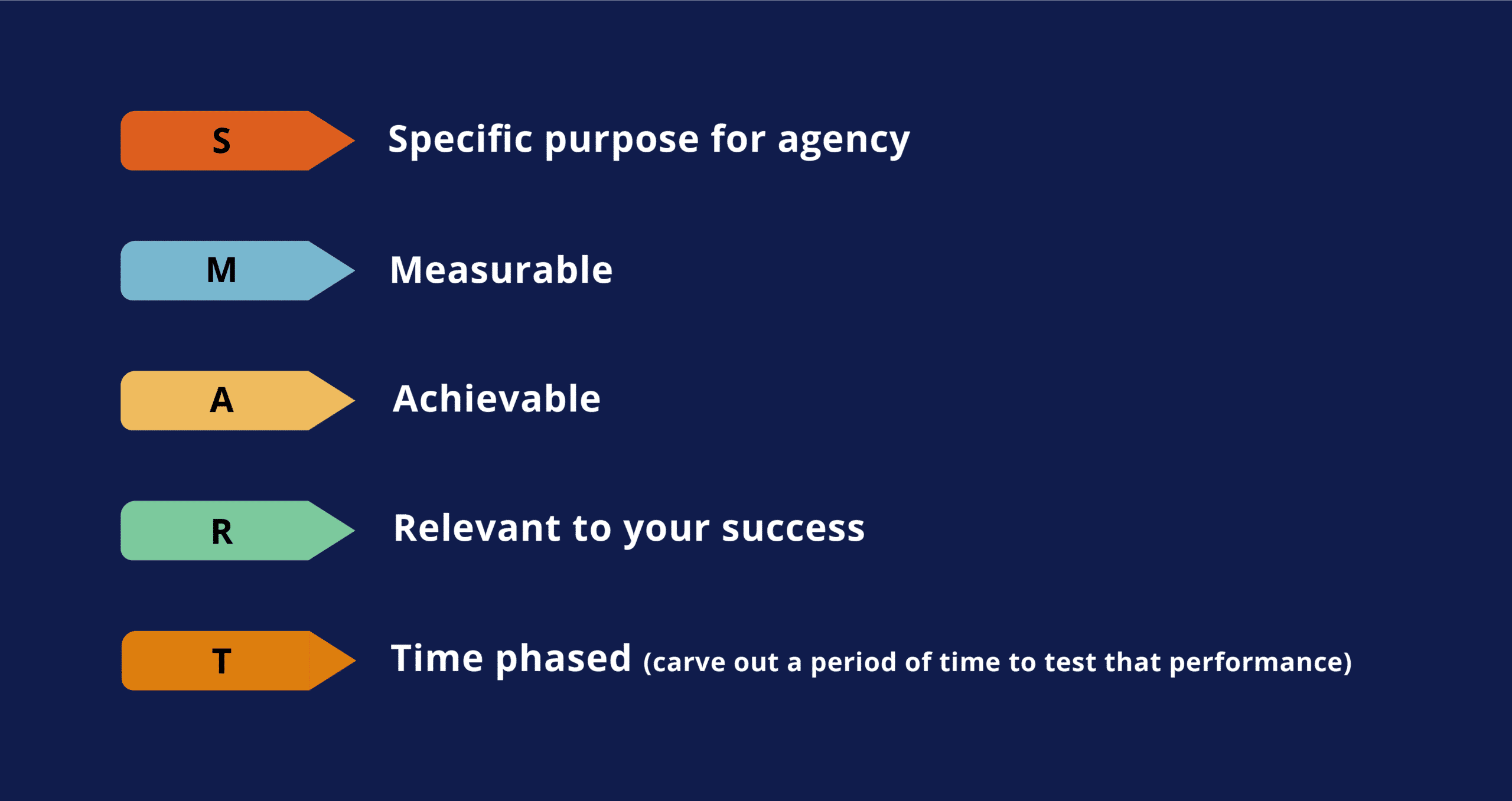
Before you start your tactic, you should always write out your goals. S.M.A.R.T. goals represent specific, measurable, achievable, relevant, and time-oriented goals.   

How this helps the caregiver or nurse:  

Making your goals and objectives SMART for the caregiver allows for an objective measure when care or service is completed.   

How this helps the client:

Making your goals and objectives SMART for the client allows for informed consent and agreement on the goals of care.  

“It’s really important to the goals that we put in place, because those are what we’re going to use to measure and to identify when we’re done. So, you know, it gives us a definition of done as well as allows the clients who were doing our care planning with, because it’s an interactive process to understand what we’re looking at for the goals of care.”

Lorraine Toderdash, Senior Product Manager, AlayaCare  

2. Assign care plan actions

Action plans are especially important for interventions to a discipline/individual. Items not assigned are often missed and can result in gaps in care.  

How this helps the caregiver or nurse:  

Assigning care plan actions will help the caregiver keep themselves and the agency accountable, as well as avoid issues from falling through the cracks and not getting addressed.   

How this helps the client:

Assigning care plan actions will help the client by providing a clear understanding of the full circle of care, as well as ensuring the client’s care needs are met.   

 “I’ve done both quality reviews in my career. I’ve also been the nurse who’s been, you know, reviewing the care plan, getting ready for discharge. And all of a sudden, I find this entire area that has not been addressed. And it, it happens no matter, you know, no matter what, but in some cases, it can delay a discharge. If you, if you don’t have those mechanisms in place or you don’t have those plans in place. In other cases, you know, it’s, it’s really that understanding. So, it, it results in something becoming much less smooth for the client. You know, they, they have an expectation of the care that’s being provided and when that entire gap happens there, it can be, it can be really challenging to recover from, and, and it can result in, you know, having to provide additional service just to make that.”  

Lorraine Toderdash, Senior Product Manager, AlayaCare

3. A balance between clinical best practices and client-specific needs

Use care plan libraries wisely by balancing the clinical best practices and what your clients need. 

How this helps the caregiver or nurse:  

Balancing care plans between clinical best practices and your client-specific needs will help the caregiver expedite the client care plan-building process. Avoid staff missing a standard of care item.  

How this helps the client:

Balancing care plans between clinical best practices and your client-specific needs will help the client engage in their own health planning and allow them to understand standards or usual practices.  

“Well, it helps the caregivers deliver better care because you, you know, you kind of go into that situation, understanding what’s needed what’s in place and having your care plan, align with those practices, as well as identifying where there needs to be a nuance in there because of the individual client’s requirements is, is incredibly helpful. And having that documented for them to support them is really important.” 

Lorraine Toderdash, Senior Product Manager, AlayaCare

4. A care workflow

Incorporate the care plan into the care workflow to drive activities on care plan content, avoid double entry (solution or system support), and document directly to the care plan.  

How this helps the caregiver or nurse:

Incorporating the care plan into the care workflow will allow caregivers and nurses to work towards specific goals, ensure documentation supports the care plan and allow them to make incremental evaluations.   

How this helps the client:

The client will gain visibility into their progress, see their incremental changes and help them avoid discouragement when they can see smaller goals being achieved.  

“It’s really important to make sure that your care plan is involved in the workflow. So, making sure that you’re not duplicating your documentation, you’re not resulting in discrepancies because you’ve got your care plan on one hand, and you’ve got the actions that you’re completing on the other hand.”  

Lorraine Toderdash, Senior Product Manager, AlayaCare

5. Evaluations

Evaluate not only the goals that are being met but also those goals that are not met. Make sure to evaluate prior to the discharge date so that plans can be made – e.g. referrals, extending services, etc. Identify where progress to goal completion is not being made and adjust. 

How this helps the caregiver or nurse:

Evaluating goals will help the caregiver or nurse meet regulatory requirements, verifies that the care plan was completed (or not), and allows for adjustments to be made to interventions that are not working.  

How this helps the client:

Evaluating goals will help the client be involved in their own health journey and own their health and wellness, celebrate goals achieved, and provide feedback when goals are not met.  

“So, what am I doing currently? What’s working well, what is challenging to the, to the other providers, the organization, or what’s been challenging, or what’s been the feedback from the clients because the clients have, have perspectives on the care that they’re receiving and whether or not it’s meeting their needs as well. And then using that as your steppingstone to go forward.” 

Lorraine Toderdash, Senior Product Manager, AlayaCare 

Why automation is the key to efficient and effective care management


It’s no easy feat to create the optimal care plan, but by keeping in mind the 5 tips listed above provided by Lorraine, you are one step closer to creating the best care plan for your team.

An optimal health care plan should be a patient-centered care plan with SMART goals, care plan actions assigned to individuals, a balance between clinical best practices and client needs, a care workflow, and evaluating goals.

Free care plan tip sheet

We’ve developed a free tip sheet to help home-based care organizations and healthcare providers work through improving their care plans.

How client-reported data can help care workers make better health care decisions

Resource Hub
Blog

How client-reported data can help care workers make better health care decisions

The voice of a client is essential to understanding whether home care services are making a difference. Client-centered care has taken the spotlight when it comes to discussions of quality. Home care agencies are now adapting to providing care that is responsive and respectful of individual client preferences and values, which guides clinical decisions.  

Agencies now have the potential to generate and capture a significant amount of meaningful data on client-reported outcomes. With advanced technology, it can be used to provide a higher quality of care.  

For client-centered care to flourish, agencies rely heavily on communication.  

Client-reported information gives providers access to insights into the effectiveness of their care from the client’s perspective. This enables them to adjust their methods to maximize the quality of care. By transforming the voice of a client into meaningful, valuable information, relationships can improve, as well as the overall outcomes.  

With electronic health records, managing client-reported outcomes and activities of daily living tracking has become much more efficient. Caregivers can now effortlessly submit information via tablets and mobile devices resulting in copious amounts of data and enhanced communication.  

While there is no shortage of data, many agencies lack the capability to analyze these records.  

Only 3% of potentially useful data is tagged and even less is analyzed within home care and health care organizations, and 95% of CEOs in this space are exploring better ways to harness, manage and analyze data [1].  

The potential for client-reported outcomes and big data analytics in home health care to lead to better outcomes exist across many scenarios, for example:  

  1. applying analytics to client profiles such as segmentation or predictive measures to identify clients who would benefit from specific treatments or care plans;  
  2. analyzing client outcomes to identify predictive events and support care worker decisions or prevention initiatives. [2] 

Imagine clients could ask, “How will this treatment decision affect someone like me?” and caregivers could respond with, “Based on the outcomes of one hundred clients who are the same age with a similar condition, so-and-so treatment would be a suitable approach for you.”  

AlayaCare has taken active steps in tackling data analytics with machine learning and advanced algorithms. Algorithms “learn” from data in an iterative fashion and produce reliable, repeatable alerts to aid caregivers in their decision-making processes.  

Read our blog, Embracing evolution: 4 ways AI and automation are driving change in home care. Learn more about how machine learning technology is driving positive change in the home care industry.  

For home health care providers, amongst the vast amount and array of data, is opportunity. 

While there are logistical challenges associated with implementing and interpreting valuable client-reported data, it is the most direct approach to gaining insights from clients that can improve the quality of care and the way home care is delivered.  

See how Acclaim Health manages to deliver better outcomes for their clients with data-driven decisions: 

Sources:  

[1] http://www.insight.com/insighton/healthcare/infographic-leveraging-big-data-healthcare/  

[2] http://www.hissjournal.com/content/2/1/3 

Key performance indicators: The power of data in home care

Resource Hub
Blog

Key performance indicators: The power of data in home care

To those who are not executives or data analysts, key performance indicators (KPIs) are an out-of-focus business term that is easier to avoid than to understand. But the reality is that KPIs are an everyman’s tool and are only as useful as employees outside the data world understand them — and see how their efforts drive an entire business forward.

KPIs are measurable values that reveal whether a company is achieving its objectives or not. Most businesses set targets, and KPIs demonstrate clearly whether those targets are being consistently met.   

It’s easy to go down the rabbit hole and get overwhelmed with too many KPIs, which can be confusing for employees and make them less inclined to modify their performance. In home care, it’s important to pick a small handful of important elements to measure — and then make sure employees know why they were chosen, how they are measured, and how the entire process is a team effort. 

Download our guide on home care data reporting and insights to learn more.  

In short: KPIs have tremendous value in moving a business forward. But they must flow through the entire staff, in the office, and on the road in order to be effective. KPIs that are done well give staff a sense of empowerment, a critical first step to the entire point of using them: to improve performance.

Measuring business success

An old saying goes: “What gets measured gets done.”

That’s the underlying reason why it’s worth the effort to track key performance indicators. The business rationale is clear: exploring data in areas critical to success simply makes sense.

Then there’s the human side, as most employees are motivated by incentives. If an agency wishes to shore up operations and ask people to hit certain targets, it’s important to measure their efforts. If there is no way to gauge whether people have succeeded, motivation will be hard to sustain.

Another saying goes: “What gets rewarded gets repeated.” Tracking KPIs means you know if teams are reaching benchmarks and agencies are free to implement whatever incentives they wish based on achievement. At the same time, employees know that KPIs are in the background holding them accountable for meeting performance goals. 

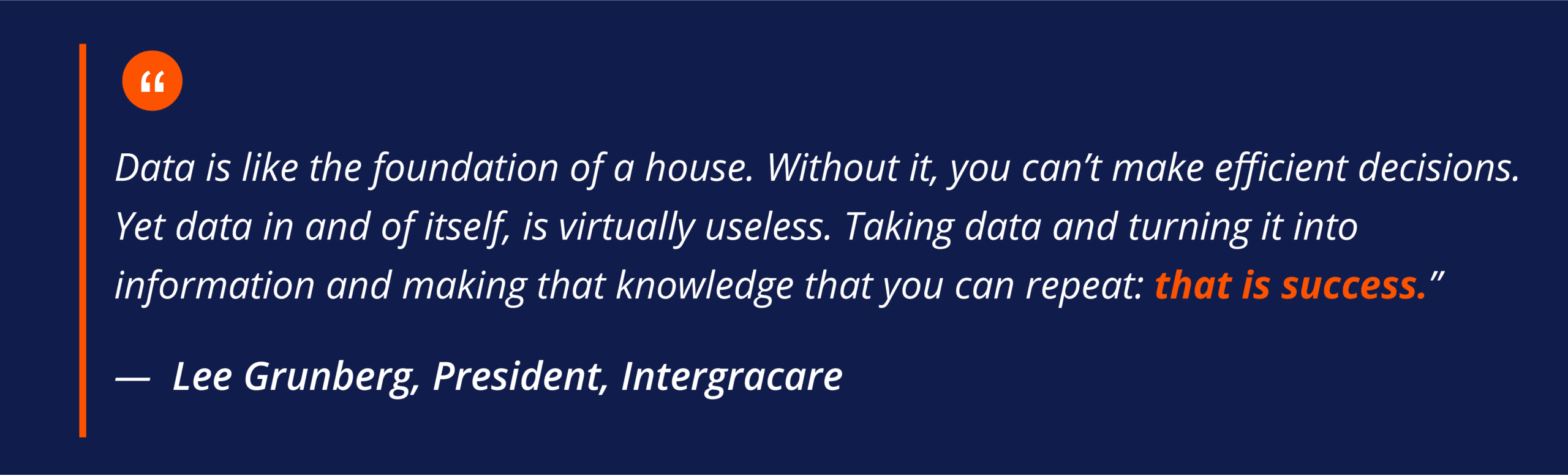
Ultimately, it all comes down to harnessing the power of data to help ensure the success of your business. Lee Grunberg, president of Integracare and AlayaCare client, sums up the power of KPI data like so: 

Integracare testimonial for AlayaCare

 “Data is like the foundation of a house. Without it, you can’t make efficient decisions. Yet data in and of itself, is virtually useless. Taking data and turning it into information and making that knowledge that you can repeat: that is a success.”  

The power of data exploration in home care 

Achieving success looks different from boardroom to boardroom. There may be an operational goal in focus — which in home care, may look like having all field staff arrive at every appointment 10 minutes early. Or there may be a larger strategic goal that teams advance toward gradually over time.

The power of data exploration begins with selecting the right data. KPIs must reflect both organizational priorities and tangible goals. What’s important to one agency (perhaps one that is looking to scale operations in the near future) may be quite different than another (perhaps it wants only to maintain a standard level of client care). 

Above all, stick to what’s known as the “SMART” criteria: 

SMART criteria graphic

It’s critical to know upfront not only what to measure but if that metric is accurate. If you can trust the numbers, then go for it.

Top 10 key reports for agency owners 

Download this checklist to learn what key analytics reports are recommended for your agency to monitor and analyze within your home care software to improve operational efficiencies. 

Top 10 key metrics for administrators 

Download this checklist to learn what key metrics administrators should keep an eye on in your agency, to continue to improve administrative efficiencies and overall better outcomes. 

Specific KPIs that can really move home care

In home care, KPIs can address key areas like on-time client visits, overall client satisfaction, employee retention, reporting, and billing. They can cover all facets of a business from HR to finance to marketing to quality of care to optimal use of personal support workers to client conversion.  

“If you explore this type of data, it’s a way to provide better care, a better workplace for caregivers, and your top and bottom line will grow,” says Lee Grunberg, who uses AlayaCare software toward these ends. 

Agencies could use KPIs to closely measure service hours, for example, because payers will pay only for specific hours worked. It’s possible to filter by day or month or any custom period to compare how PSWs, registered nurses, and other care workers are performing over time.

Certain KPIs could be used to confidently gauge the quality of care. For example, client feedback metrics could track positive and negative reports, and help an agency continuously improve care. Caregivers themselves may fill those reports themselves, input feedback of any kind, and also have the chance to describe an occurrence, what may have caused it, and how it was addressed. This also means your care teams are treated fairly. 

KPIs flow through AlayaCare technology

Data exploration will carry home care agencies of any size into the future. If current software lacks the tools to capture and analyze data or has limited functionality or flexibility, an agency’s business edge is being dulled. 

The AlayaCare platform was built to be continuously improved and flexible enough to shift along with an evolving industry. It offers agencies seamless access to data, advanced analytics, and reporting abilities in any area of business.

When an agency uses AlayaCare, all data is captured and contained in “cubes.” For example, all the KPIs you’d want around caregiver visits could be housed in a “visit cube.” 

“There is a ton of data in AlayaCare waiting to be unearthed, filtered, and exported into something you can use,” says Integracare president Lee Grunberg. “The final play is taking that data and transforming it into knowledge to help the agency.” 

To add another layer of flexibility AlayaCare introduced customizable dashboards so every user could log into the solution and have an at-a-glance view of the reports, metrics, and KPIs that matter to them most.

“We’re trying to use responsive analytics to identify coming trends, such as when we may have a surge or drop-in clients,” Soukup says. “Having the data automatically exported to the dashboard instead of manually entered into an excel spreadsheet has improved both the accuracy of inputting and efficiency of sharing the data.”

Integracare testimonial for AlayaCare

Helping Hands’ use of KPIs has enabled them to create highly accurate reports around fall prevention as well as capture vital data around resident stays and cost per unit of its transitional beds’ program set up for clients who are leaving acute care settings. (Read all about Helping Hands in our client profile.)

In the end, developing and using KPIs is far easier now than it ever was, particularly if all data is housed in the same software solution. Exploring this treasure trove of information means everyone and everything is looked after by office staff, caregivers on the road, clients, and the agency’s future.


How to make the most of your home care data

In this guide, you’ll get a deeper understanding of how to authentically transform the data you’re collecting into real, actionable change. Download the guide now >

Home care data guide

4 ways to improve home care inefficiencies with technology

Resource Hub
Blog

4 ways to improve home care inefficiencies with technology

With the growing demand for home-based care services, organizations are struggling to keep up with repetitive tasks and inefficiencies that can be costly in terms of time and resources. You want your employees in the head office doing only the tasks that involve building a relationship and making decisions. When you look at what’s happening in the back office of the typical home care or home health agency today, you have a lot of activities that don’t involve either of those two things. These mundane activities not only slow down operations but also take away from the quality of care being provided to clients.  

Adrian Shauer, CEO of AlayaCare, expressed in episode 35 of the HomeHealth360 podcast, that he believes that this is the year that agencies finally can win the war on repetitive tasks.  

There are many options available to you and these solutions can help you learn and execute mundane tasks, which can improve efficiency in your home care organization and focus more time on delivering quality care to your clients. 

Here are 4 ways to improve inefficiencies in your home care business with technology.  

1. Automate your repetitive tasks and mundane processes  

Automation is a game-changer for home care agencies. Using artificial intelligence and robotic process automation (AI and RPA), home care software can streamline processes, automate tedious tasks and save time and money in the long run. 

3 ways automation can save your agency time and lower back-office costs over the long term in your home care business: 

  1. Automate intake and scheduling: By automating intake and scheduling processes, home care agencies can reduce the time required to manage patient information, freeing up staff to focus on delivering care. 
  1. Automate billing and revenue cycle management: By automating billing and revenue cycle management processes, home care agencies can help reduce the risk of errors, speed up payment processing times, and improve cash flow. 
  1. Automate documentation and record-keeping: By automating documentation and record-keeping processes, home care agencies can help ensure that patient information is accurate and up to date, reducing the need for manual data entry and reducing the risk of errors. 

By reducing the need for manual labor on repetitive tasks and back-office activities, automation can help reduce staffing costs which alleviates some of the stress placed on home care providers so they can focus their time on what matters most: providing patients with quality home care.  

“We have moved all of our paper processes in all of our forms into the system, which has dramatically reduced our intake time from 45 minutes to 15, as well as reducing the burden of assessment questions being asked to our clients over and over again”  

Emily Hope, Senior Manager, Better Living Health & Community Services 

Learn more about automating workflows by reading our blog, Connect apps and automate workflows with AlayaCare Connector. 

2. Interoperability and integrations: connect and exchange all your data, applications, and systems with each other seamlessly  

With the vast array of automated solutions available today, interoperability (a system to work with other products/systems) and the ability for seamless integration have become increasingly important for home care providers.  

With all agencies having unique needs and guidelines, having an automation solution that can easily integrate into a current ecosystem is key. This not only allows for a seamless transition between systems but also creates scalability opportunities to help quickly adjust processes as needs arise.  

Along with process integration, easy data exchange helps to ensure information is accurate and up to date across multiple departments or teams. All of this helps to create a more efficient business process automation system for home care. 

4 ways interoperability and integrations in home care software can improve business operations: 

  1. Increase operational efficiency: By integrating different systems and allowing for the exchange of data between them, home care agencies can streamline their operations, reduce manual errors and duplications, and increase the speed of processes such as scheduling and documentation. 
  1. Improve patient care: Allows home care agencies to access a comprehensive view of patient information, including medical history, medications, and care plans, which can help to improve the quality of care provided. 
  1. Enhance collaboration: It can improve communication and collaboration between different care providers, enabling them to work together more effectively and coordinate patient care more efficiently. 
  1. Effective data management: Home care agencies can consolidate patient data from multiple sources into one central location, making it easier to access, analyze, and use this data to drive improvements in care. 

Here’s a quick checklist to help you check if a home care software provider offers interoperability and integrations: 

  • Is the software compatible with other systems commonly used in the agency? 
  • Does the software support data exchange between different systems? 
  • Does the software allow for centralized data management? 
  • Does the software support collaboration between different care providers? 
  • Can the software be customized to meet the unique needs of your agency? 

“AlayaCare’s ability to effectively communicate with different software applications has been a huge plus, our clients have the ability to manage their accounts online giving them the freedom to view and pay invoices when it’s convenient.” 

Rich Willis, Executive Director of Client Services Lifematters. 

Learn more about interoperability and integrations in home care software in our blog Achieving Data Exchange Between Multiple Systems.  

3. Optimize your processes and predict patient needs with artificial intelligence (AI) and machine learning  

Machine learning is quickly becoming an integral part of home care with automation solutions like artificial intelligence (AI) and robotic process automation (RPA). Machine learning in home care involves the use of algorithms and statistical models to improve the quality of care and the efficiency of care delivery. It can help automate and optimize various tasks, such as predicting patient needs, managing schedules, and analyzing patient data.  

3 key benefits of machine learning in home care: 

  1. Enables quick adaptability. These technologies allow machines to learn and execute tasks based on rules. As new data becomes available, machine learning algorithms can be updated to reflect changing trends and patterns in patient behavior, making it easier to improve the quality of care over time.  
  1. Reduces time and resources needed for training and retraining staff. Training and retraining humans, while necessarily important in certain situations, can be costly and time-consuming as it takes away resources from the actual delivery of care. This can be especially important in-home care, where staff turnover can be high and there may be limited resources for training and development. With machine learning, tasks can be automated, and processes can be standardized, reducing the need for extensive training and allowing staff to focus on delivering care. 
  1. Organizations can scale more easily. With machine learning/automation in place, scaling an organization is much more efficient as processes have already been developed and established as they can be easily replicated and expanded, reducing the time and resources needed to manage and maintain operations. This can be especially important in-home care, where the demand for services is rapidly increasing and organizations must find ways to meet this demand while maintaining high standards of quality. 

“The agile nature of the platform allows us the flexibility to adjust to any evolution in our care environment. Whether that’s a merger or a pandemic, we can adapt and deploy the technology optimally to enable our clinicians to focus on care and not on administrative technology. The ease of use and scalability lets our clinicians perform at their highest levels.” 

Brett Michalak, Chief Information Officer, Option Care Health 

Machine learning helps make your whole system more organized and cost-effective, allowing for greater efficiency throughout home care businesses. 

Learn more about different AI applications in home care software, here.  

4. Use and collect data to make informed decisions and improvements 

Data collection and analysis is a powerful tool for optimizing processes in-home care facilities. By leveraging data to identify patterns and trends, organizations can better understand their operations and more effectively manage the challenges of providing quality service. Data collected from patient visits, employee productivity, caregiver technology tool usage, and other areas can be used to identify where inefficiencies exist and develop strategies to address them.  

Accurate and up-to-date data is essential for businesses to make informed decisions, as insight derived from it can provide information on current trends and predict future outcomes. As such, clean data is important to ensure that accepted processes are continuing to meet their anticipated standards. 3 examples of types of data to collect and use to make informed decisions and improvements in your agency: 

  1. Use data to measure caregiver performance against goals and identify areas of improvement. Caregiver performance can be tracked in a variety of ways, such as tracking their response time to requests, the number of service requests completed, and client feedback. This data can be used to identify which caregivers are performing better than others and where there is more room for improvement. Additionally, it can provide insight into processes that may need to be streamlined or improved in order to increase efficiency. 
  1. Collect demographic data on clients to tailor services and caregiver-client matching. Demographic data provides valuable insights into a home care agency’s target market and helps them create offerings that meet its unique needs. Collecting demographic data also enables you to match the right caregivers with the right clients by considering factors such as age, gender, cultural background, lifestyle preferences, etc. 
  1. Track client feedback to understand client experiences. Client feedback is critical for understanding how well a home care agency is performing overall. It allows organizations to get an accurate picture of customer satisfaction and identify areas where they may need improvement or areas of exceptional service that should be highlighted. Tracking this feedback also allows agencies to track trends over time so they can make future decisions based on past performance. 

In theme with our 3rd tip above, home care organizations can use software with machine learning algorithms and AI to enable smarter decision-making through improved data analysis capabilities. AI can identify user behaviors, predict outcomes and respond to requests quickly, helping organizations stay agile. Predictive analytics enables home care organizations to identify potential problems before they arise, leading to cost savings in the long run. 

“In the short time since deployment of AlayaCare, features that have been most impactful to us have been accurate capture of Caregiver compensation data (hours worked, and reimbursable travel time and related mileage). Our costs in these areas have significantly decreased.” 

John W. CFO, a quote from Capterra review (Health, Wellness & Fitness Business with 201-500 Employees, used the software for 6-12 months) 

Learn more about how you can leverage data for your home care business in our e-guide on How to make the most of your home care data.  

“The bad news on the side of the ledger is that margin compression has become such an issue for providers of in-home care that they have no choice but to tackle the overhead costs in their business. Now, the good news is that tools have arrived to finally enable that.” 

Adrian Shauer, CEO of AlayaCare 

Mundane tasks and inefficiencies not only slow down operations but also take away from the quality of care being provided to clients. There are many technological options available to you such as automating workflows and processes saving both time and money in the long run. AI solutions can aid businesses by learning and executing rules-based tasks quickly and efficiently, while machine learning and integration uphold interoperability unique to each agency’s needs. Clean, accurate data collection is essential to know where improvements need to be made, but with the right tools, organizations can scale much faster.  

Interested to learn more about how technology can help improve inefficiencies in your home care organization?

Watch our webinar on 3 ways to supercharge your home care business in 2023.

3 ways to supercharge your home care business in 2023 webinar recording

Home Infusion Therapy… Without the Paperwork

Resource Hub
Blog

Home Infusion Therapy… Without the Paperwork

For patients with conditions that require medication to be infused by needle or catheter, staying at home for treatment is optimal. Not only is it more comfortable and more manageable for them, but infusion-based treatments in hospitals and outpatient clinics — particularly for those who suffer from chronic disease — is an unsustainable expense that is climbing in the U.S., Canada, and elsewhere.

Home Care Stock Image

Home-based solutions are quite simply a must in order to ensure effective and efficient health care delivery in markets across the globe. And there’s no question that home infusion therapy —  whether it’s led through pharmacies, home care agencies, or other key stakeholders — is increasingly in demand. In fact, globally, the market is expected to reach $31.9 billion USD by 2022. Government legislation is also fueling growth, with Medicare for example expected to approve a rising number of home-based health care services in the next few years in a bid to limit the burden on hospitals. 

Clearly, there is room for agencies to capitalize on the home infusion market. Yet, as with so much of health care, there can be an administrative process on the back end that can quickly grow sluggish. The main daunting element is paperwork. Without an end-to-end software solution to address the significant reporting requirements, agencies may risk not fully tapping the potential of the home infusion market because of administrative inefficiencies.

Move the ‘Manual’ out of Home Infusion Reporting 

The main group of professionals that administer such therapy in people’s homes and clinics are nurses. While it’s clear that nurses’ time is best spent caring for patients, it is too easy for them to get caught up in paperwork with the reporting demands of home infusion. 

For starters, nurses generally must file a post-injection or post-infusion report, manually on paper. These reports are clearly very important for patient care, as many elements must be noted in order for clinicians to confidently monitor patients while they are at home. For example, one of the key clinical metrics to capture are adverse events: the first-hand proof of whether a body is tolerating and benefiting from a particular medication. Vitals that fall from the safe or expected range, fevers, fainting, incomplete doses, patient-reported complaints: these types of important details must be notified to all that patient’s care team.

All of it must be reported. Yet when this time-consuming task is done manually on paper, it means a nurse’s time isn’t spent doing what they are expertly trained in treating the next patient. Electronic reports change this dynamic entirely, and the best software solutions will aggregate all the information a nurse is collecting quickly and easily. 

Through modern technology, the burden of post-infusion reports can be lifted, helping agencies thrive and their nurses stay engaged. 

Home Infusion Electronic Documentation

Documenting client visits electronically has clear benefits for home infusion. Pharmaceutical clients see increased value in their products, which solidifies relationships and leads to more expedient payments from those clients. Such technology is looked upon very positively — because people know the right data collection is mutually beneficial for patients and providers.

The right software, usable by nurses, administrators, schedulers, and anyone involved in a client’s care, accurately captures metrics in real time. At AlayaCare, our flexible software can evolve with an organization, meeting future business needs or regulatory requirements. For home infusion, AlayaCare’s ability to capture vitals remotely is an added benefit in ensuring both accurate and timely completion of post-injection and post-infusion reports.

Our home infusion software is built with APIs that integrate all types of data from multiple sources — all accessible up to the minute. Nurses can report easily on a device and the information flows straight to those who need to receive it.

Without home infusion electronic documentation, nurses are left filling reports by hand and then faxing, scanning, or even mailing it back to those who need it. This is not only high-scale inefficiency, but it also increases the risk of errors with wrong numbers and other pitfalls that then need more time to be adjusted. This inefficiency spirals: managers spend time printing off reports and scanning them into a pharmacy or agency’s system; pharmacies have records that are not up-to-the-minute and must rely on patients’ word-of-mouth in some cases; billing departments wait for slow-moving notes from nurses in order to bill for services.

Home infusion is a fast-moving target. To do it well means employing the right technology. Ideally, it should fit smoothly with software that does everything else for an agency simultaneously. Request a demo any time to see how we do it.


Watch the live platform tour of AlayaCare’s home and specialty infusion software, in addition to a Q&A on why our client CSI Pharmacy chose AlayaCare.

How Technology Can Help Eliminate Home Care Employee Churn

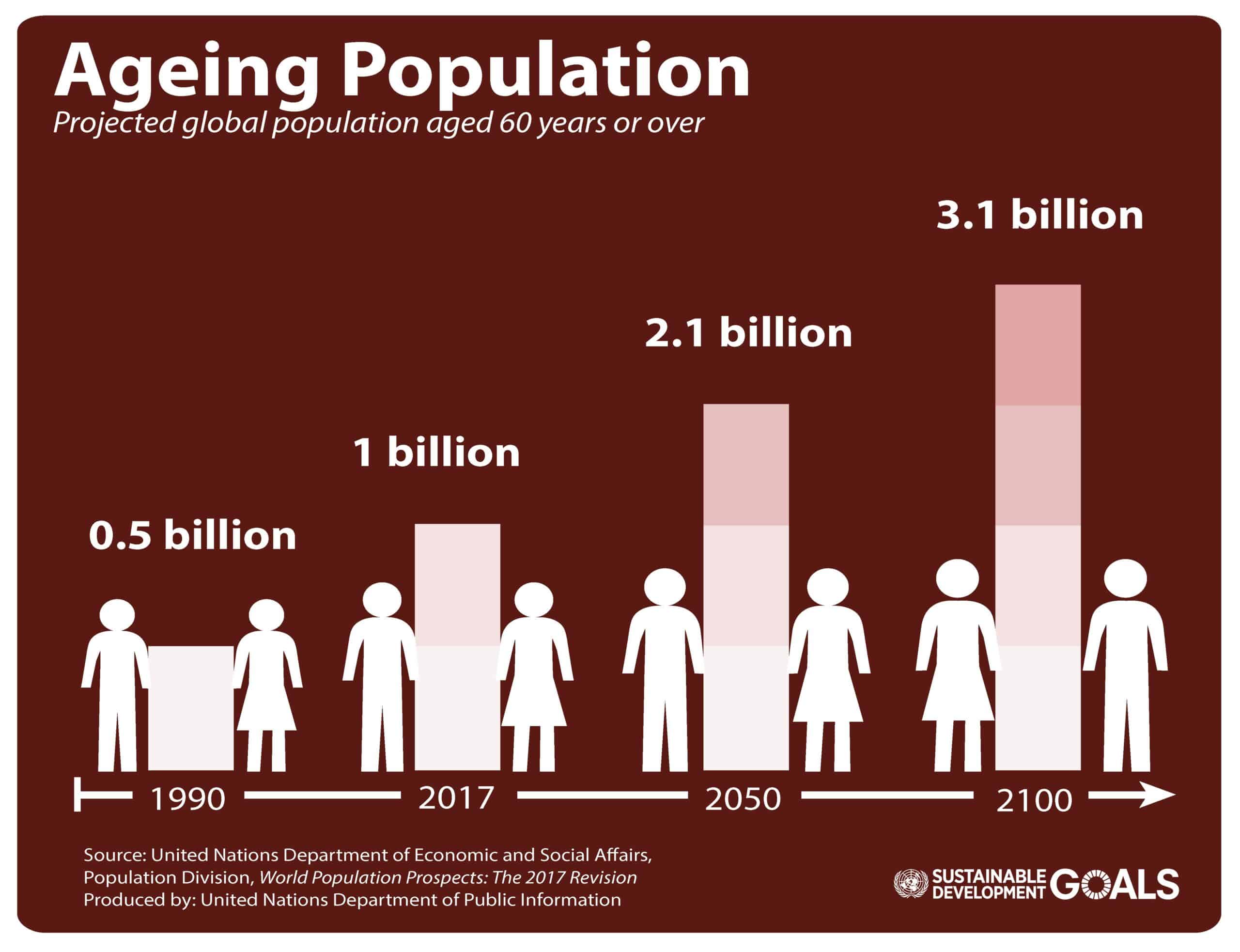
Across the United States, 16 percent of residents are over the age of 65 — and by 2060, it’s expected that one in four Americans will be in the retirement zone. This aging society presents challenges and opportunities across a wide swath of industries and sectors.

It’s hard to imagine a market more invested in this population than home care, where demand is surging, and agencies strategize on staying competitive and capitalizing on this moment in time. One clear factor is having the right teams in place to keep the business moving into the future. 

Age_Graphic

(more…)

Across the United States, 16 percent of residents are over the age of 65 — and by 2060, it’s expected that one in four Americans will be in the retirement zone. This aging society presents challenges and opportunities across a wide swath of industries and sectors.

It’s hard to imagine a market more invested in this population than home care, where demand is surging, and agencies strategize on staying competitive and capitalizing on this moment in time. One clear factor is having the right teams in place to keep the business moving into the future. 

Age_Graphic

(more…)

Value-Based Purchasing and the Role of Home Care Software, Our Ultimate Guide

What’s the best way to pay those who deliver home care services? The issue remains elusive when it comes to firm answers. It also remains a point of seemingly endless debate and consternation, which isn’t surprising when so much money, deep implications, and sensitivities collide in one discussion. 

(more…)

What’s the best way to pay those who deliver home care services? The issue remains elusive when it comes to firm answers. It also remains a point of seemingly endless debate and consternation, which isn’t surprising when so much money, deep implications, and sensitivities collide in one discussion. 

(more…)

Introducing the AlayaSphere: AlayaCare’s Third-Party Integration Listing

Home care organizations looking to grow in today’s market require a vision that is unique, defendable, and sustainable. They must erect the infrastructure to support that vision, which includes the people of course, but also needs to include technology. Many service provider agencies grapple with the need for change, while not compromising their business-as-usual work that has kept the lights on all these years. 

(more…)

Home care organizations looking to grow in today’s market require a vision that is unique, defendable, and sustainable. They must erect the infrastructure to support that vision, which includes the people of course, but also needs to include technology. Many service provider agencies grapple with the need for change, while not compromising their business-as-usual work that has kept the lights on all these years. 

(more…)

CHRIS Integration: Updates, Referrals, and Patient Records Directly from the Source

The road to the future of home care is paved with integrated, virtual and collaborative care models. Coordination will remain a major factor in reducing health care expenditures, supporting home care agencies, and vastly improving the patient experience. Silos will disappear, and information will flow securely along the continuum.

(more…)

The road to the future of home care is paved with integrated, virtual and collaborative care models. Coordination will remain a major factor in reducing health care expenditures, supporting home care agencies, and vastly improving the patient experience. Silos will disappear, and information will flow securely along the continuum.

(more…)