Alayacare blogs

On-Demand eLearning for Home Care: A Game Changer for Training and Productivity
In today’s modern, technology-driven world, every industry is turning towards automation to boost productivity and streamline operations. The same applies to the home care industry. For home care organisations, software onboarding can help them achieve their goals and objectives by increasing the productivity of staff members. The onboarding process is vital, especially for newly hired…
5 MIN READ
5 emerging AI trends in home care in 2024
Everyone is talking about the power of ChatGPT, machine learning, and large language models. This is how we can use them in the home care space.
5 MIN READ

5 (more) ways of reducing repetitive tasks through home care software solutions
Many home care organisations struggle with administrative burdens. Care workers spend a significant portion of their day on tasks like data entry and maintaining client records. These activities can take even more time for rural providers who travel long distances to reach clients. Our blog, 5 ways of reducing repetitive tasks through home care software…
5 MIN READ

How do you handle repetitive tasks in home-based care? 5 tips to reduce time on admin tasks and focus more on your clients
57% of home care providers reported that they spend up to 3 hours a day on administrative tasks such as data entry, tracking client records, etc., according to a survey conducted by Home Health Care News. In addition, home-based care providers who work in rural areas often must travel long distances to get to their…
5 MIN READ
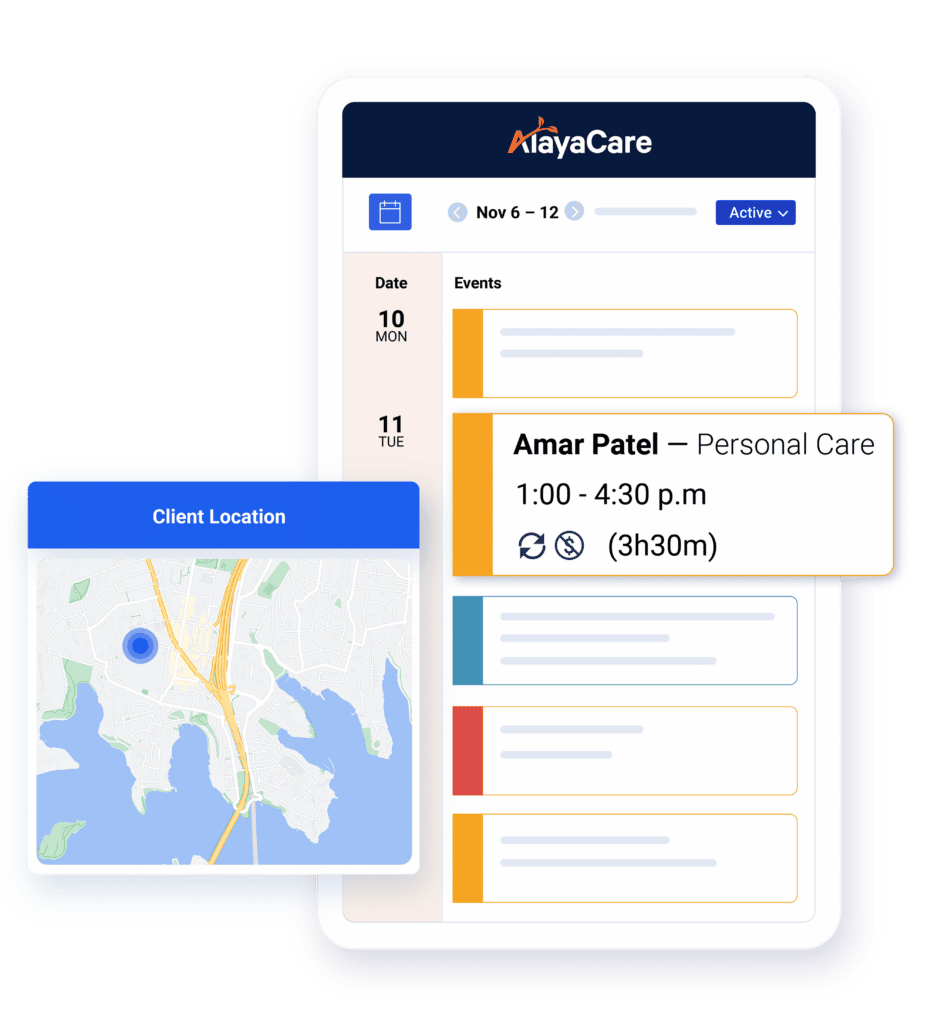
Scheduling optimisation for home and disability care
AlayaCare is harnessing artificial intelligence to create optimised algorithms that modernise staff allocation in home & disability care Scheduling is the lifeblood for home and aged care providers, as they work tirelessly to ensure that our loved ones receive the care they need. And organisations know that providing consistent, fully allocated shift work to their…
5 MIN READ

How Do I Choose the Right Home Care Software Vendor?
Looking for a new home care software vendor can be a complicated task—there’s no doubt about that. If you’ve already started your research, I’m sure you’ve found that the market has gotten pretty crowded with a number of vendors that all seem to be offering the same features. With the home care landscape shifting to…
5 MIN READ

The evolution of workplace training in a post pandemic world
In the wake of the COVID-19 pandemic, the business world underwent a sizable shift in the way we work and learn. The pandemic accelerated the adoption of online learning and remote work, forcing both employees and companies to adapt swiftly. Zoom calls and online learning modules became the norm. The transition from traditional in-person training…
5 MIN READ

Working for AlayaCare: Rachel’s story
At AlayaCare, we’re proud to have a unique team of specialised, local experts supporting our customers every day. For Rachel Linton-Mapp, a registered nurse and our Professional Services Manager (Residential), working with AlayaCare has been a rewarding experience professionally. But even more than that, AlayaCare has provided a supportive and caring environment, where a focus…
5 MIN READ

AI and algorithms: optimising care for an ageing population
With an ageing population in Australia, the demand for care workers and the service they provide has never been higher. With many older people wanting to receive care in the place they call home, providers want to find ways to meet their needs more effectively and efficiently. This is where artificial intelligence (AI) and advanced…
5 MIN READ