
Category: Back Office Suite

How to Leverage Data to Grow your Home Care Business

Resource Hub
Blog

How to Leverage Data to Grow your Home Care Business

The topic of business intelligence and leveraging data to improve outcomes has been predominant in the home health industry these past few years with the care system shifting to a bundled payment model. Meanwhile, the availability of powerful and affordable home care information and communication technology, both for providers and clients, has raised the capacity to gather and process more data, communicate more effectively, and monitor the quality of care delivered. The question you must be asking is: 

How can I leverage data to improve operations, and more importantly, client outcomes today?

If your home health organization has yet to delve into emergent data trends, there are several ways you can begin leveraging the information you have to produce meaningful and actionable insights to: 

  • Improve business processes 
  • Make more informed decisions 
  • Provide personalized customer experiences 
  • Reduce costs 
  • Enable an evidence-based approach to care 
  • Enable predictive outcomes and prevention 

In this blog, we’ll outline three:

1. Identify current opportunities

Take some time to assess your environment and current processes. As a business executive, it’s likely you already have access to a fair amount of both clinical and operational data that can be analyzed and reviewed in order to find gaps or opportunities that will help determine where there’s room for improvement. 

For example, this might mean sifting through historical data or pulling reports in your solution to determine how many late visits have occurred in the last calendar year or reviewing visit dates to determine which times of the year are the most popular for referrals. 

With the proper solutions in place, such as a home health software solution with integrated data exploration and business intelligence tools, analyzing your current data could be as simple as clicking a button. 

Take some time to look through the data that you’re already collecting on a regular basis to help you optimize business operations and improve outcomes in the coming year. 

If you fell short somewhere last year, think about what you could do to remedy the problem this year. If you’re able to spot underlying trends, what changes can you make to take advantage of them this year? 

2. Give your team the tools they need to be successful

Another simple way to use data to fuel business growth and improve client outcomes is by giving your team the tools they need to be successful. This could simply mean providing them with quick and easy access to the information they need, when they need it, or limiting the number of paper processes they deal with daily. 

Point-of-care clinical document solutions empower care workers by enabling remote access to the most up-to-date health information at the appropriate time during the client visit. 

With immediate visibility into client history and real-time data capturing, field staff and clinicians can make more timely and informed decisions, in turn, leading to improved clinical outcomes.  

When you invest time and resources into giving your team access to the data, they need to do their jobs, it allows them to focus their time and energy on what they were hired to do: providing high-quality care to your clients, building lasting relationships, improving health outcomes, and helping you grow your business. 

3. Enable Decision Support

As a more advanced tactic to leveraging agency data, large home health organizations are adapting to new technologies such as wearables, family portal, and electronic health records (EHRs), which allow them to gather large data sets of clinical and/or operational information.   

By looking over data collected in home healthcare software solutions, providers can use their data to solve problems and improve care processes in their organizations and for their clients in their homes. 

For example, it’s possible to set up predictive alerts based on clinical vitals, resulting in provider decision-support and the reduction of hospital readmissions. Providers could also look at the data around missed visits and identify any trends amongst employees to help develop new processes and policies to prevent them from being overlooked. 

 The home care industry is shifting to an outcome-focused model, which involves providers making use of all the available clinical data and factoring in data science and analytics. 

Bringing all client information together gives stakeholders more visibility and insight into the care being provided and opens the door to improved care coordination, outcome-based reimbursements, population health management, and improved outcomes. 

Bringing all client information together gives stakeholders more visibility and insight into the care being provided and opens up the door to improved care coordination, outcome-based reimbursements, population health management, and improved outcomes.

Simply thinking about the ways data could be leveraged in your organization and adjusting accordingly will get you ahead of the curve. If you’re struggling to utilize your data due to a lack of tools or limited functionality and flexibility in your current solution, research the AlayaCare platform in a web-demo and see how our system can give you seamless access to your data, advanced analytics, and the future of home care. 

Published:
4 Operational Best Practices for Home Care Agencies

Resource Hub
Blog

4 Operational Best Practices for Home Care Agencies

In a time when home care is on the rise and more clients are seeking home care services, you may feel as though your agency is running low on time and resources to keep up with the growing demand. Many home care agencies are struggling to find a way to provide efficient and effective care, without placing too much stress on their employees.  

While hiring more staff could temporarily ease the stress of increased client referrals, there are still several workflows associated with each visit that can leave your agency bogged down; verifying paper time sheets, processing billing and payroll, preparing clinical documents and reports, etc. 

While a buildup or delay of agency workflows may sound like a minor disruption of your overall agency operation, these factors could eventually result in more serious issues. 

If your employees don’t have the tools and processes in place to complete their tasks efficiently and effectively, not only could the client’s routine and satisfaction be disrupted, but there could be major impacts on their health. 

Here are some of the tools and best practices your home care agency could implement today in order to help increase operational efficiencies: 

1) Go Digital

If your home care agency is littered with mounds of paper and you’re running out of tedious, manual processes to find and input the information, now might be the time to consider looking into your digital options.  

Technology—even the most basic EHR software solutions—allows you to keep all your information in one digital format. This will give you the ability to find information, and complete processes at the click of a button, which can be a huge time saver. Eliminating paper reduces data entry, minimizes errors and duplication, and will give your employees more time and space to focus on more important tasks. 

See how Lake Ridge Community Support Services eliminated manual paper processes with one platform: 

2) Use your Data

Operational visibility and insight are extremely important for the success of a home care agency. If you feel like you don’t know where your agency’s time and resources are being allocated, you need to start collecting and analyzing data in order to gain more visibility into operations. 

This might be more time-consuming if you’re working with paper processes, but if you’ve implemented a home care software solution, you should have clear visibility into all operational activities and data. 

Consider leveraging this technology to quickly pull information and generate home care business intelligence reports in order to determine processes that need improvement or require more attention. 

3) Leverage Mobility

Field workers are generally always pressed for time. They need fast and easy access to client information in order to complete visits efficiently and effectively.  

Mobile solutions give care workers all the necessary information they need to efficiently complete a visit at the point of care, while also eliminating paper time sheets and increasing safety. If you have yet to implement a software solution, consider one that offers a mobile solution to really streamline processes, reduce spending and save your employees valuable time.  

Check out AlayaCare’s mobile application: 

4) Don’t Underestimate Technology

New advancements such as optimization and predictive analytics allow agencies to anticipate future events and enable invaluable decision support.  

While implementing new technology can be challenging, intimidating, and costly (at first), its purpose is to help make the lives of home care providers easier and save your agency time and money.  

The capabilities of technology are only expected to grow, and it’s certain that the future of home care will be increasingly efficient and streamlined. Rather than holding onto dated processes, take the time to step into the future. 

Learn more about how your Home Care organization can leverage technology to achieve better operational outcomes.  

Published:

Steps to prevent ransomware attacks in home care

Cybersecurity is a critical challenge facing the healthcare industry globally. Along with phishing, ransomware ranks as a top threat to EHR security. A 2021 report by HIMSS uncovered that ransomware was the second-most common vector of cybersecurity incidents in the healthcare industry, comprising 17% of all breaches.  

(more…)

Supporting patient, caregiver and family engagement with technology

Resource Hub
Blog

Supporting patient, caregiver and family engagement with technology

Families have turned away from nursing homes and other institutionalized settings at record rates over the last few years. Instead, they’re choosing home care for their loved ones. As a result, home care organizations are not only caring for more clients – but more clients with acute and complex needs.

It’s far from the only new demand for home care organizations. Value-based Medicaid payments have finally rolled out across nine states in 2022, with many more states forecasted to follow shortly. Agencies accepting these reimbursements are required to deliver better outcomes and back these claims up with data.

Between changing payer rules, consumer preferences, and acute client health needs, the demands on the home care industry are higher than ever. Agencies must learn to do more with the same resources as the caregiver shortage continues to strain the sector.

The good news for home care leaders? New digital tools and strategies also continue to evolve to support these changing needs. AlayaCare CEO & Founder Adrian Schauer, predicts that the technology industry will rise to the challenge, offering digital tools that enable innovative home care agencies to adapt to the new care landscape over the next few years.

Curious about how your organization can adapt to these new demands? On three recent episodes of Home Health 360, AlayaCare’s podcast offering global perspectives on home healthcare hosts Jeff Howell and Erin Vallier spoke with industry leaders about how they leverage novel tools and implement programs to increase engagement across entire clients’ entire circle of care.

Use clinical providers as coaches for home care providers

Home care clients require more complex care plans than ever. As a result, caregivers and nurses need to complete more involved ADLs than ever before.

Lourdes Wiley, Clinical Educator and Nurse Consultant, and Irina Gorovaya, Home Health Consultant, Educator, and Founder of Amity Healthcare Group, explored the importance of staff training and competency programs at home care agencies during Episode 14 of Home Health 360. They shared recommendations for agencies seeking to maximize their share of the growing acute home care market while providing complex care safely.

Goravaya suggests that agencies reimagine their competency program from a box-checking event to a transformational program. “You’re setting up the grounds to not only ensure you have skilled and knowledgeable personnel – but most importantly, to get better patient outcomes with better knowledge and better skills,” says Goravaya.

As a consultant, Wiley reviews many clinical charts for personal care agencies. She notes, “There’s a norm of expecting home health nurses to figure it out. But we shouldn’t be expecting this; it’s dangerous. We arm them with the why – why is this important, why does this work?”

Wiley and Goravaya frequently encounter agencies hesitant to train caregivers who might leave within three months. But they recommend that organizations not only look at competency programs as an investment in staff retention.

Hiring a competency training consultant, like Amity Healthcare Group, is an excellent option for many agencies. But this is something many organizations could take on themselves if they have a clinical leader willing to spearhead this – and the funds to invest in training equipment.

Once you’ve implemented new competency training for your team to take their skills to the next level, ensure you’re setting, tracking, and measuring the new metrics you can now achieve. Lean on your home care software provider for the tools to create and manage client care plans. And then ensure you’re tracking and reviewing ADLs via a care worker mobile app.

Leverage new tools to educate and empower caregivers

Providing different outcomes for clients means using new tools. And perhaps some new perspectives.

In Episode 2 of Home Health 360, Mari Baxter, COO, and David Chandler, Senior Director of Strategic Programs at Senior Helpers Franchising, shared how they use innovative caregiver training that has proven effective at keeping their clients out of hospital and living at home for longer.

The team at Senior Helpers has implemented a hands-on training course for caregivers where they roleplay care scenarios, find & remove hazards and learn practical new techniques in a four-room apartment setting. And they offer it to clients’ families as well.

While it’s not a traditional approach, Baxter notes, “I can have a caregiver in a client’s home from nine to five. But then a family member comes in and doesn’t know how to use a Hoyer lift or a tub bench properly. What good is it if we can only keep clients safe while we’re there?”

And they don’t stop at family training – everyone at Senior Helpers goes through the same program, including executives.

Their hands-on technique has successfully kept their clients living independently for two months longer on average. But Baxter shares that it’s also increased client satisfaction: “Families can rest assured if they hire someone from Senior Helpers that we have verified our caregivers’ skillset.”

And what’s even better? It’s attracting caregivers to their organization. Baxter says, “It’s so fun to watch caregivers call you up and say – can I come to your training? I heard you guys have this fun training. That’s never happened to me before. “

Implement messaging tools that connect the client’s care team

Although many technologies across the Internet of Things, such as wearables, passive alarms, and virtual assistants, have made big promises about how they can transform the home care industry – few have made a significant impact so far. In Episode 9 of Home Health 360, Intrepid USA CEO John Kunysz pointed out, “Seniors don’t want to wear Life Alerts. It’s a badge of dishonor. The technology exists, but it hasn’t been integrated in a way that seamlessly fits into a patient’s environment.”

So how can innovative home care agencies use technology to enhance communication – and improve outcomes? By leveraging Family Portals that connect and engage the entire circle of care: clients, loved ones, caregivers, and agency leadership.

How do messaging tools like Family Portal improve outcomes? They allow clients and their loved ones to:

  • Request a different frequency of recurring visits or request one-off visits
  • Take a more significant role in the care plan by reviewing goals, inventions, and progress
  • Keep track of medications and vitals shared on the portal
  • Improve caregiver-client matching through confidential personnel reviews
  • Share updates from other care providers that may otherwise not be communicated

For many agencies, client retention can be as challenging as caregiver retention. Family Portals increase patient engagement and participation in care and reduce client turnover.

Engaging the circle of care with technology

There are many paths to better care using innovative techniques and strategies. But one tool connects all your options: technology.

Intrepid USA CEO John Kunsyz’s advice for home care organizations on picking the right technology platform? “Think about where you want to be three to five years from today.”

While there isn’t one technique that will single-handedly transform patient, caregiver, and family member engagement – there is one technology platform that can unite your tools: AlayaCare. We propel agencies to the future of home care with solutions that improve clinical outcomes, measure & manage key performance metrics and give caregivers the tools to do their best work. And you won’t want to miss our new and improved Family Portal.

Connect with us today to discover how we can support your organization as you deliver the next generation of care.


Published:

How Technology Can Help Eliminate Home Care Employee Churn

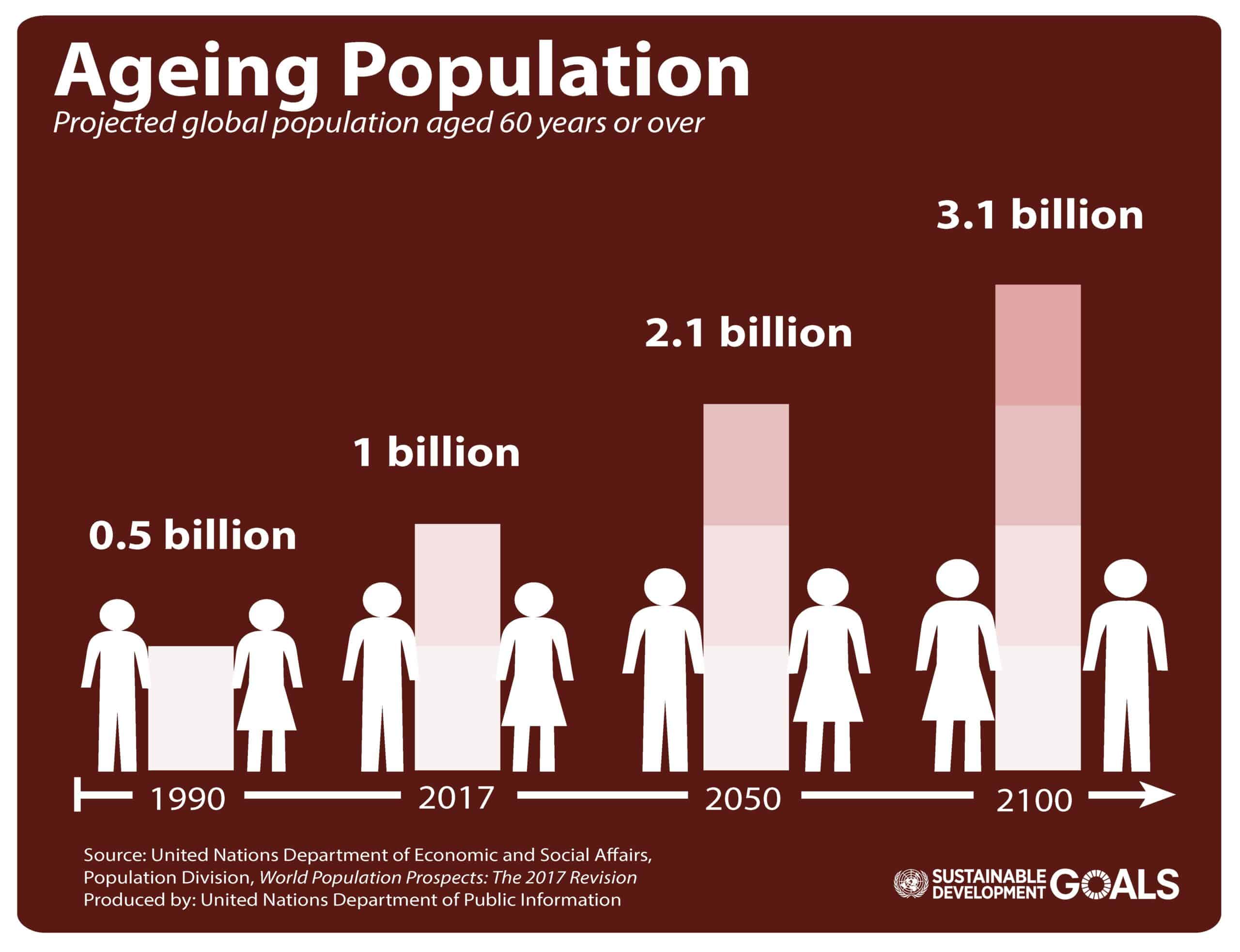
Across the United States, 16 percent of residents are over the age of 65 — and by 2060, it’s expected that one in four Americans will be in the retirement zone. This aging society presents challenges and opportunities across a wide swath of industries and sectors.

It’s hard to imagine a market more invested in this population than home care, where demand is surging, and agencies strategize on staying competitive and capitalizing on this moment in time. One clear factor is having the right teams in place to keep the business moving into the future. 

Age_Graphic

(more…)

Simplify Home Care Agency Accounting with Integrated Accounting Software

Home care agency accounting is one of the most tedious and time consuming processes in your organization. According to Zapier, nearly a quarter (24 percent) of small business owners spend 5-10+ hours each week on administrative tasks alone. 

(more…)

Home care agency accounting is one of the most tedious and time consuming processes in your organization. According to Zapier, nearly a quarter (24 percent) of small business owners spend 5-10+ hours each week on administrative tasks alone. 

(more…)

Custom Dashboards: At-a-Glance View of Home Care Reports that Matter to You

A must-have for many home care providers when implementing a software solution is user satisfaction; both clients and providers need to be satisfied with the technology in order for it to deliver maximum value and also positively impact care delivery. That’s why the AlayaCare platform is equipped with a feature that ensures user satisfaction—flexibility.  

(more…)

AlayaCare’s Electronic Billing: Automatic Claim Submission and Adjustments

Billing for home care services is no easy task. Inaccurate home care billing documentation can generate hours of rework and, even worse, delay reimbursement.

(more…)

Billing for home care services is no easy task. Inaccurate home care billing documentation can generate hours of rework and, even worse, delay reimbursement.

(more…)

AIRDOCS Offers Custom Communications to AlayaCare Clients

AlayaCare is fortunate to enjoy many strong partnerships with companies whose tools amplify our software platform and provide even greater value to our clients. One such company is AIRDOCS, whose friendly staff you may have met at our Better Outcomes Conferences this past year in Niagara Falls, Canada and Adelaide, Australia.

(more…)

AlayaCare Budget Module: Effortlessly Define & Track Income Vs. Expenses

Resource Hub
Blog

AlayaCare Budget Module: Effortlessly Define & Track Income Vs. Expenses

Several countries, such as France, Germany and Australia, have implemented self-directed models of care delivery, boosting patient satisfaction by giving individuals and families a greater say in their care packages. This model emphasizes clients’ right to have more visibility, engagement, and arguably the most integral component—choice in the care and services they receive.

With the consumer having more flexibility and choice over what services they receive and how they receive them, they are now entitled to select their services according to what they see fit. This brings the urgency for a platform that is able to disseminate information and break down each service, the cost; hourly, weekly, monthly and yearly as well as the notes that are taken down after each service. 

Introducing AlayaCare’s Budget Module Solution

With AlayaCare’s new budget module, your agency can: 

  • Define and track income vs. expenses for individual clients
  • Create budget templates to reduce data entry
  • Experience a fully integrated budgeting solution 

Agency challenges and how AlayaCare’s budget module solves them: 

Challenge #1

Most home care organizations are poorly positioned to accommodate the shift to consumer- or self-directed care models due to lack of transparency and inadequate data management tools. 

Solution

While other vendors have strived to update their existing software, we have developed a modern, revolutionary platform. AlayaCare has developed a next-generation software that is intuitive, responsive and simple to use.

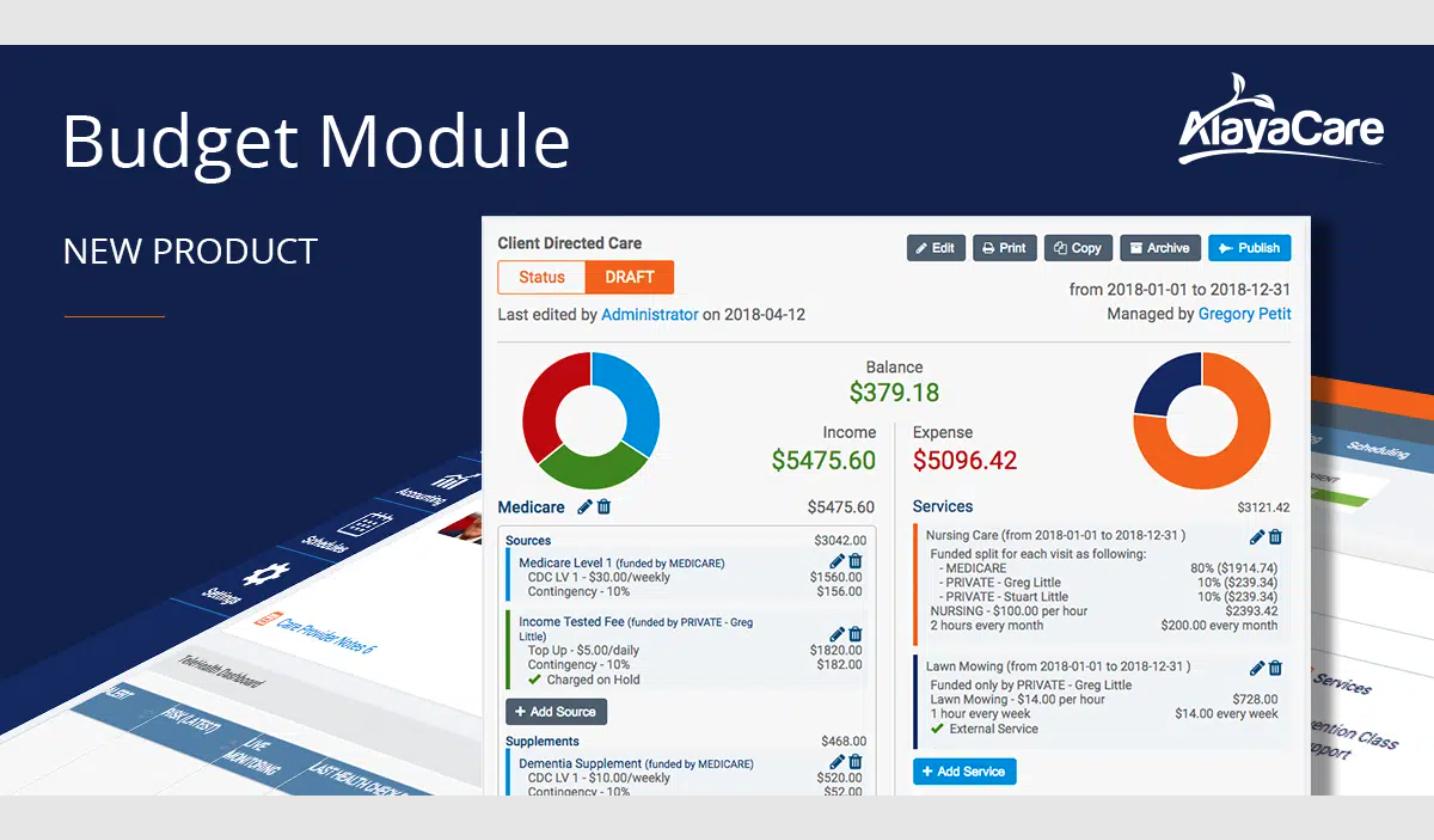
AlayaCare’s budget module allows you to define income vs expenses for a client. Incomes are grouped by Program with the ability to define your Sources, Supplements and Fees/Charges for each. Expenses are defined as Services, Fees, Premiums or Equipment/Supplies. The budget’s balance is automatically derived from the Total Income less the Total Expenses.

AlayaCare Budget Module

Challenge #2 

Many home, community and aged care providers are burdened with using multiple solutions or spreadsheets to keep track of individualized budgets or client care packages.

Solution

AlayaCare’s budget module is fully integrated within the platform enabling more efficient workflows and reducing data entry. Data entered in client budgets automatically create associated entities upon budget publication. Publishing the budget will also generate services and client billing premiums so you don’t have to re-enter them in the client profile:

alayacare budget


Challenge #3

Re-creating the same budget for multiple clients can take time and result in duplicate data-entry.

Solution

If most of your client budgets will use a common base, you can define budget templates that will auto-populate new client budgets, reducing data entry and creating more efficient workflows.

budget template
budget template 2

Challenge #3

Medicare provides payments to Care Organisations for the claimed subsidies and supplements in “batch” payments. These payments are often split; with a portion in advance and then Medicare determines the balance in arrears. 

Solution

AlayaCare has the ability to reconcile these payments, and similar payments in the future, with the system generated transactions that reflect the claims made on Medicare.

Check out the AlayaCare Budget Module

Whether your agency is currently operating on paper documentation or your working on a dated legacy solution, AlayaCare could be the solution you’ve been looking for. 

Learn more about how AlayaCare’s Budget Module can drive your organization forward by clicking the link below. 

Published: